Should You Get Your MBA?
August 24, 2021

Your girl is one degree hotter! My MBA is officially complete.
For those of you wondering if it is worth pursuing an MBA, my answer is ABSOLUTELY if what it offers fits your interests, goals, and needs. My two-year journey to learn all about business administration and innovation has led me to so many incredible opportunities. This includes my partnership with AmorSui. I helped create the Alice Hamilton antimicrobial gloves (see below) as a way to protect the community amidst the pandemic. This gave me a firsthand experience in product development and business administration.
What are the pros?
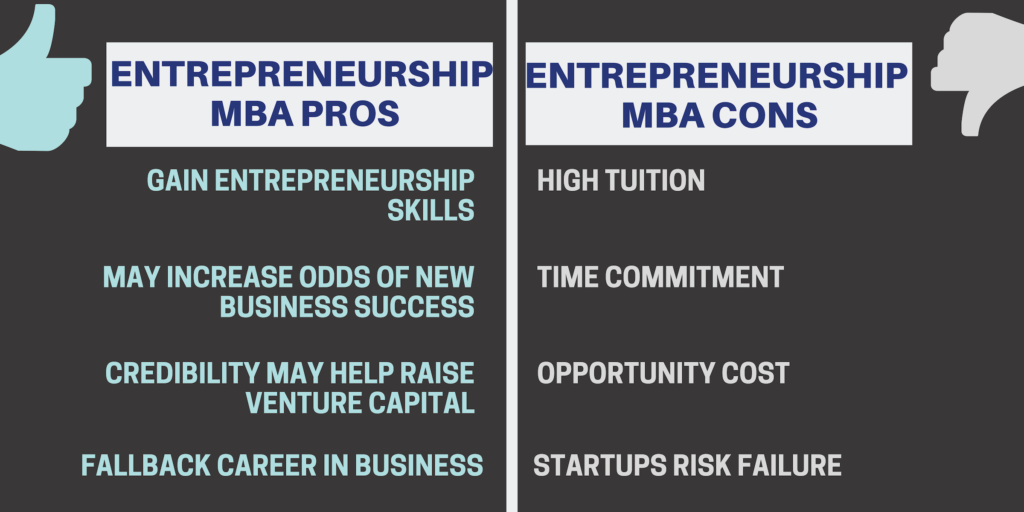
Earning your MBA has tons of pros. It is a great way to build yourself professionally and set you apart from others. It can offer new career opportunities, from management and leadership positions, as well as increase compensation and pave the way for job promotions. If you're interested in starting a business, this degree can equip you with the skills and knowledge you need. Learn more HERE.
![Why Do Students or Employees Earn an MBA Degree? [Infographic]](https://infographicjournal.com/wp-content/uploads/2020/06/MBA-degree-feat.jpg)
What are the cons?
One of the major cons to earning this degree is the cost or to put it in MBA turns "return on investment." There are ways to circumvent and/or mitigate the expense. I was able to pursue my degree through my residency program, which offered employee tuition reimbursement. See if your employer will help pay for your degree.
Another concern is the time and commitment. I enrolled in a part-time online program. The curriculum was done remotely and easily manageable with my busy hospital schedule. My program was two years long and, for the most part, I took one course per semester. There are others that are shorter or longer depending on how many courses you want to take and if your program accepts prior undergraduate or graduate course credits.
What types of MBA programs are there?
In addition online vs in person there are several different types of MBA degrees you can pursue. I chose to pursue an innovation MBA or iMBA. Earning an MBA was described to me as learning how to do a job whereas earning an iMBA was described as learning how to do a job, finding ways to do it more efficiently. The coursework taught me how to create an effective business plan to implement them. As a physician, I focus on quality improvement and patient-centered care. Being able to apply my innovative thinking skills to my practice just made sense. There are other concentrated MBA degrees as well such as Executive and Healthcare.
Leave a comment or feel free to message with any additional questions!
xx
Alyssa Cole, DO, MBA ;)
JOMO: Joy Of Missing Out
August 10, 2021

JO•MO (noun): Joy Of Missing Out. Have you ever heard of this term before? It’s the opposite of, or in some cases, the antidote for FOMO (Fear Of Missing Out).
Research has shown that FOMO plays a key role in social media engagement. Watching other people live their lives so you don’t feel out of the loop can actually make you feel MORE left out or like your life is less exciting. The two feed into each other in a never-ending cycle. This can lead to low levels of satisfaction and unhappiness if left unchecked. What we see on Instagram, Facebook, Twitter, Snapchat, and other apps is not the whole picture. It is an illusion of someone's life, carefully curated to share only what that person wants you to see. Recognizing this concept is half the battle. After all, comparison is the thief of joy.
So how do we overcome this feeling while still connecting online with others and enjoying all the good things about social media? Enter JOMO - the feeling of contentment with staying in and disconnecting as a form of self-care. Let's read that again:

JOMO is an approach that emphasizes joy, gratitude, and mindfulness. It’s a chance to focus on your life, your intentions, and your goals. Instead of checking your feed however many times a day or first thing in the morning and last thing at night change the behavior (or as some call it, addiction). Limit your time on social media so you can spend more of it doing the things you love. Pivot your mindset from passive activity to productivity. Focus your attention inward and find internal gratification in yourself. Don't look outward or search for external sources to validate your thoughts and actions. Experience life the way YOU want to live it, not the way someone else is living it.


Interestingly, there is evidence to suggest that the more photos we take of our experiences, the less we remember them. This is known as the Photo-Taking-Impairment Effect. Capturing our own memories can actually impair our mind's ability to store them for ourselves. Essentially we rely on our camera's "prosthetic memory" to substitute our "organic memory."
I love scrolling through posts and watching stories but realized recently it was making me feel so much wanderlust. With the delta variant on the rise, I have been less inclined to travel but every time I opened Instagram, I was transported to beautiful places of the world, seeing travel adventures I wanted to experience too. I decided I needed to step back and appreciate where I was and my own surroundings, knowing that I will travel again soon. I took time this past week to put my phone and camera away in order to appreciate being in the here and now. So many exciting changes are ahead with my upcoming move to Virginia and I don’t want to miss a single moment! Although I promise I will keep sharing content, I will be doing it mindfully with a focus on the Joy of Missing Out. Won't you join me?
Advice for New Residents
July 1, 2021

July 1st is finally here - the day when new intern physicians start their residency program and current residents advance to the next year of training, making them "seniors" or for those who graduated, "fellows" (and in some cases attendings). It's a huge day for all involved, whether it's exchanging a short white coat for a long one, being granted the chance to moonlight, or teaching the incoming doctors everything you wish you had known. It's also the start of an overwhelming few days, weeks, even months but this is normal and a great way to learn how to get comfortable in feeling uncomfortable.
The start of the first year of my Physical Medicine and Rehabilitation residency was so overwhelming with information being thrown at me in a million different packets, pdfs, e-mails, lectures, and more. There was no consolidated resource where I could find the information I needed to help me on call or rotation, whether it was understanding how to properly document, knowing who to contact, or figuring out the schedule. I vowed to create a handbook for future residents so no one ever had to feel the way I did. My classmates and I worked together, breaking down each rotation into a mini-orientation guide, explaining the on-call system, providing contact information, and even using approved Epic electronic medical records screenshots to show how to place orders. The next class was prepared with their own customized pocket-size handbook the way I wish I had been - complete with our Therapy Dog gracing the cover.

Because that is what we should always be doing as doctors and teachers: finding ways to improve one another by passing on what we learned. So here are a few things I wish I had known:
SPEAK UP: Not sure about something? ASK. Communication is key to ensuring everyone is on the same page, has all the information, and no one is missing anything.
TEAM UP: You are in this together with your co-residents. If you see someone struggling, step in to help them with the understanding that they would do the same for you. One of my favorite tactics was to tag team with my co-resident if they were available. We would see a patient together. One of us would document and start putting orders in while the other would take the history and do the physical exam. While we were capable of doing it on our own, we found it was a great opportunity to learn, see more patients, and save time.
FUEL UP: No, I'm not just talking about coffee. I'm talking about WATER. You are going to be so focused on treating your patients, you'll forget to drink water so it is essential that you remind yourself to stay hydrated. I carried around a one-gallon water bottle, which may have looked a little silly but I was never thirsty, especially on my inpatient rotations.

FILL UP: Fill those white coat pockets with snacks because you never know when you’re going to need an energy boost. My go-to was always a protein bar but careful they don't get squished!
WISE UP: That's right, it's time you combined your critical thinking, time management, and medical knowledge into quick decision-making action so you can be efficient and effective when it comes to treating your patients. Be sure to ask your seniors or attendings for tips and tricks especially regarding documentation and putting in orders. Simple keyboard hacks and smart phrases will save you so much time! Ask your seniors or attendings for tips and tricks especially when it comes to documentation and putting in orders. Simple keyboard hacks and smart phrases will save you so much time!
Finally, recognize that these are the years for training, teaching, and learning. At the end of the day, the notes will get done and the orders will be placed but you have to ask yourself - What did you learn? What did you gain? What can you do better next time and how will this help your patients? Make sure you have an answer to each of these so you know you’re getting the most out of your training!
Any tips you'd like to share? Comment below!
How To Network
May 11, 2021

|
| PC: @ptap48 |
Standing in line at Harry Potter World with my co-residents, I was SO excited to try the famous Butterbeer. We had just finished our AAPMR medical conference and the park was reserved for all of us attendees. I remember turning around to the woman behind me to ask her for a photo (pix or it didn’t happen). We struck up a conversation and discovered we were both physicians in Philadelphia. “I specialize in Cancer Rehabilitation,” she said, to which I replied, “What’s that?” She then invited me on the spot to spend elective time shadowing her to learn. Fast-forward to now and I am finishing up my fellowship year in Cancer Rehabilitation with her as my mentor!
This is my absolute favorite networking story because not only does it show the importance of connecting but it also shows how one conversation (and one Butterbeer) can change your future. Now, with the advantage of technology and social media, comes even more access to experts, mentors, and educational opportunities.
So how do you network? Here are six steps to break it down:
1. Be persistent and assertive but not aggressive
Recognize your value and don't give up but only seek out connections that are engaged.
2. Seize every opportunity
No matter where you are - an airport, a medical conference, on the bus, or at a dinner party - recognize that each encounter you have could lead to something bigger. Do not squander these. If someone offers to put you in touch with someone they think might be able to help, say YES. I found my PM&R elective rotation in medical school through a family friend. This later turned into a job opportunity but I had already decided on pursuing a fellowship.
3. Be prepared
Do your research and know your audience. What are the other person's areas of interest or expertise and how did they help you? Make sure you get their contact information/business card and that you have a business card of your own (along with resume, and/or portfolio depending on the situation) for the other person (ie job fair). When it comes to business cards, I always include my photo because it helps match the face to the name. This lets the other person remember you better and gives them a tangible piece of you to walk away with and have on hand for the future. Also, always have a pen available!

4. Be open-minded
Networking comes in all different forms. And technically they say we are connected to everyone in the world through six degrees of separation.
5. Be an active listener
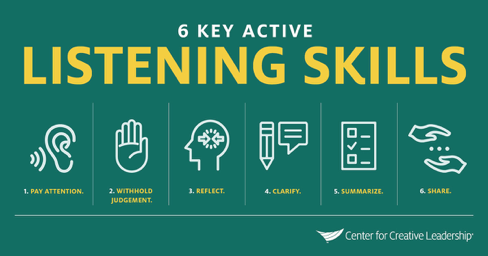
This is a great skill set to have not just for networking but for connecting with other people, whether patients, colleagues, friends, or family.
6. Prepare your Elevator Pitch
This is a 30-second to two-minute statement of who you are, what you do, where you see a connection with the other person, why you’re valuable, and how you can help. Whether for a building your career, proposing a business idea, or overall establishing a connection, having this prepared can set the stage for the conversation and the future of the relationship.

Another great example of networking? My partnership with AmorSui Clothing, which led to me helping develop the Alice Hamilton antimicrobial gloves. This happened in part because of a connection made on social media and in part because of a colleague who encouraged me to get my MBA. So remember, it could happen anywhere, including right here! And you never know which opportunity could land you in Forbes magazine😉

So the key takeaway is, you never know who you will meet and when so take advantage of every opportunity…


Social Icons